Climate communication: from issue to impact

David Willans
Director, Sustainability
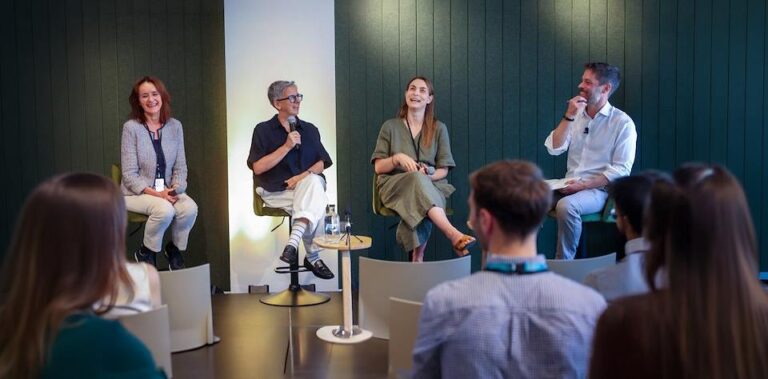
In the run-up to London Climate Action Week, Bladonmore is partnering with Headland, Lloyds Banking Group, Unilever and Bayer on an event that explores how the climate conversation is changing. David Willans, Director, Sustainability explains why it’s a change that climate and communications professionals need to understand and embrace.
Next week is the eighth London Climate Action Week. This year we’ll also see the 18th New York Climate Week and the 31st COP. High-profile figures continue to talk about the threat of climate change, from Gore and Thunberg to DiCaprio, the Pope, the Dalai Lama, Coldplay, Skepta, and Miley Cyrus.
That was important when climate change was a future problem. Now that it’s here, the conversation is shifting. Climate change is no longer just a concept to communicate; it’s increasingly becoming the context within which other conversations happen.
Climate reality is changing the conversation
People who work in climate spend a lot of time talking about it. Most other people don’t. They’re busy thinking about work, bills, family, health, sport, food, travel and everything else that makes up daily life.
Inflation is a useful comparison. Most people, other than economists, do not spend much time thinking about inflation as an economic concept. But they do care when mortgage payments rise or food becomes more expensive.
Climate works in a similar way. For years, it was difficult to communicate because it felt distant and abstract. Its impacts were often discussed in terms of future risks rather than present realities, making it easy for people to ignore. That is becoming increasingly difficult as its effects are felt more directly in everyday life.
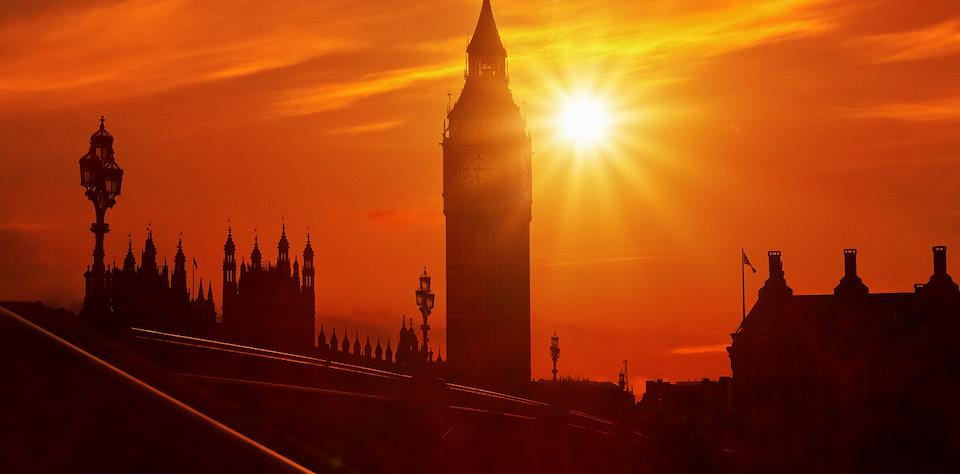
For example, during recent heatwaves, people were often talking about climate change without naming it. Gardeners talked about how to adapt to changing growing conditions. Employers considered how to protect their people from extreme heat. Football fans debated water breaks and fixture schedules at the World Cup. The conversation was not always labelled as climate, but climate was shaping what people cared about.
The same shift is happening in the media. News outlets Axios and Semafor both recently rebranded their climate newsletters to Axios Future of Energy and Semafor Energy. Not because climate has become less relevant, but because energy security, electrification and industrial transformation are where the story is now playing out.
Climate is no longer competing for attention as a standalone issue. Increasingly, it is shaping the issues people already care about.
Changing the conversation changes the outcome
That matters because changing the conversation can change the outcome. When climate is framed only as a climate issue, it can be easy to set aside. But when it is connected to energy security, industrial strategy, food systems, health, housing or jobs, it becomes more immediate, relevant, and actionable.
Take China as an example. It has around a third of the world’s renewable energy generation capacity and 60% of the world’s EVs on its roads. These facts are often now celebrated under a climate banner, but renewables became a strategic priority in China’s 10th Five-Year Plan back in 2001, in large part because they offered greater energy security and reduced reliance on fuels controlled by other countries
The UK took a different route, making renewables a strategic priority through the 2008 Climate Change Act. That framing mattered. It meant electrification (renewables, energy storage, EVs, smart grid technology) was often discussed as an environmental obligation, rather than as a broader industrial and economic opportunity.
Today, China’s electrification sector accounts for around 11% of GDP. In the UK it’s closer to 3%. It raises an interesting question: how different could it have been if we’d talked about electrification and renewables that had been framed not only as climate solutions, but as part of a national growth story?
We must connect the dots to spark conversation and action
The communications lesson is simple. More people can be brought into climate action when the conversation starts with what matters to them, as opposed to climate change as an abstract cause.
The most effective climate leaders will not be those who make every conversation about climate. They will be those who understand how climate is already shaping the conversations organizations are having about risk, resilience, growth, talent, investment and trust.
That is the challenge at the heart of the Future Climate Leaders Forum, and increasingly at the heart of climate communication itself.
Follow Bladonmore for insights and outputs from the Future Climate Leaders Forum.
Share article