
Insights from the Future Climate Leaders Forum 2026

David Willans
Director, Sustainability
David Willans, Director, Sustainability at Bladonmore, discusses the takeaways for business communicators from the Future Climate Leaders Forum at this year’s London Climate Action Week.
London Climate Action Week (LCAW) ran during a record-breaking week of unnaturally extreme heat. It would almost have been ironically funny if it hadn’t been so deadly. Thankfully, the 80-odd attendees of LCAW’s Future Climate Leaders Forum, convened by Bladonmore, Headland and Lloyds Banking Group, sat in air conditioning.
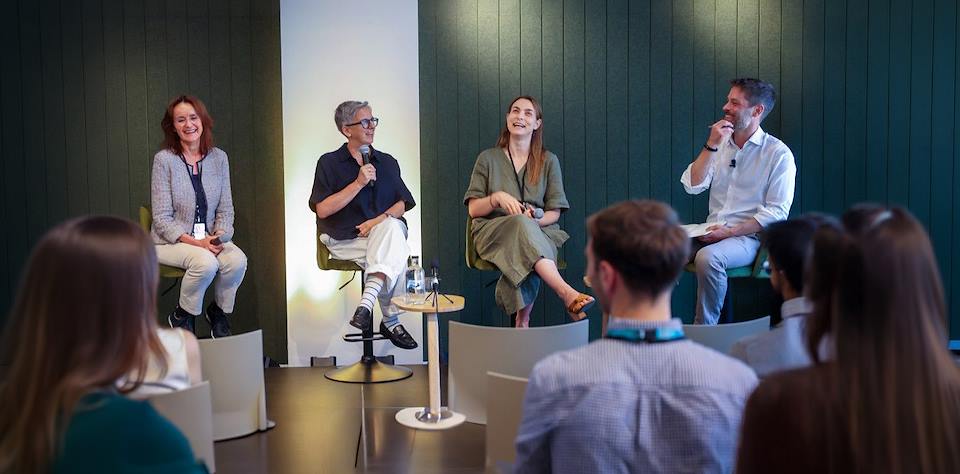
The forum brought together some of the UK’s climate-leading voices in business, law, civil society, government and academia to share their insights for the next generation of leaders. Key takeaways from the week included:
Businesses are embedding climate action
Businesses are talking less about climate, but do not mistake this for a retreat. It’s a refocusing of limited resources and attention on embedding climate deeper into every aspect of business. That is a lot harder than many thought.
Market forces are increasingly driving the transition
In the last five years, the economics of technologies such as solar, batteries, wind and electric vehicles have moved further and faster than people imagined. Huge amounts of financing are now available. Energy and supply security are at the top of business and policy agendas. The direction of travel is set. The question is how fast we can get everyone moving
Business action needs policy change
With every country adapting to climate change, countries with clear, stable, and supportive policy frameworks will be the ones that build advantages in expertise, technology and cost that will deliver growth. That’s something every business and country needs right now. But, as many panelists said, it isn’t something that one business can call for alone. What businesses can do is create and join coalitions calling for the policy changes needed.
Business voices are still critical
Despite businesses talking less about what they’re doing on climate change, visible support from the business community is still needed. As one panelist said, “The government is not moving if it doesn’t have a semi-circle of businesses behind it, saying we’ve got you, take the step, we’re right with you.”
As climate impacts hit the economy, the urgency for action grows
Climate change shouldn’t be talked about in abstract anymore. It is already here. Increased flood risks are factored into insurance and mortgage prices. Extreme heat is disrupting transport, cutting crop yields, delaying construction projects and hitting productivity because no-one is sleeping well. For business, this means making the connection between climate change and economics as clear as day.
For people, climate communications work best when they start with what people already care about – either love, money or health.
Six years of research by the New Energy Coalition exposed hundreds of millions of people to four and a half billion impressions. Their data shows that, regardless of ideology, economics or geography, people engage more in climate when it’s connected to the people and places they love, their wealth and their health. This will not surprise any communicators. But it is always a good reminder.
Climate leadership in business is becoming good business leadership
As climate change impacts increase, leaders won’t be judged by the ambition of the commitments they make. They’ll be judged by their ability to deliver through uncertainty, connect climate with commercial reality, and build the coalitions needed to keep progress moving.
If you want help with how you’re approaching your climate communications, get in touch.
Share article